Knee Replacement Surgery In ChennaiJeshwanth Orthopaedics
There's a certain moment a lot of our patients describe the same way — the day they realise the pain isn't going away on its own anymore. Maybe it's struggling to get up from a chair without pushing off with both hands. Maybe it's skipping a family function because you know the stairs will be a problem. Or maybe it's just lying awake at 2 a.m. because your knee won't let you sleep on your side anymore.
If any of that sounds familiar, you've probably already tried the usual things — painkillers, rest, maybe a knee brace, physiotherapy. And for a while, those things help. Then one day they stop helping quite as much, and that's usually when people start looking into Knee Replacement Surgery In Chennai.
We want to be upfront about something: surgery isn't our first suggestion for every patient who walks through the door. A lot of knee pain can be managed for years with the right combination of medication, exercise, weight management, and sometimes injections. But when the joint has genuinely worn down and nothing conservative is touching the pain anymore, replacing the joint tends to be the option that actually gives people their life back.
That's really the philosophy Dr. Jeshwanth Netaji follows—treat the person in front of us, not a generic checklist. At Jeshwanth Orthopaedics, we take the time to understand each patient's pain, lifestyle, goals, and expectations before discussing whether knee replacement surgery is the right option.
Why Patients Choose Jeshwanth Orthopaedics?
A few things patients tell us matter to them when picking a surgeon:
- Real, hands-on surgical experience in joint replacement, not just theory
- Personalized care — treatment plans built around your actual life, not a template
- Modern surgical techniques that support faster, safer recovery
- AIIMS-trained expertise, where applicable
- Treatment grounded in evidence-based medicine rather than guesswork
- Advanced rehabilitation support that continues after surgery, not just before
- Long-term follow-up, because implant health matters years down the line, not just in the first few weeks
It's this combination of clinical expertise and genuine attention to every patient's needs that has earned Dr. Jeshwanth Netaji a trusted reputation among patients who have experienced his care firsthand.
What Is Knee Replacement Surgery, Really?
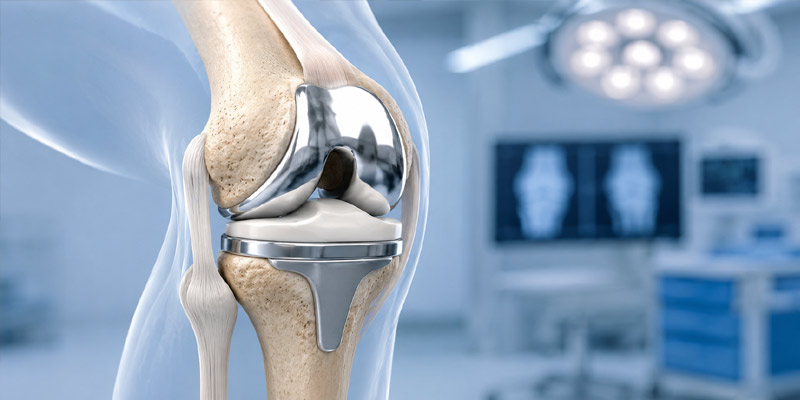
In plain terms, knee replacement (doctors call it knee arthroplasty) means removing the damaged surfaces inside your knee joint and replacing them with an artificial knee joint — usually a combination of metal and medical-grade plastic that mimics how a healthy knee moves.
There are two broad versions of this:
- Total Knee Replacement, where the whole joint surface gets resurfaced.
- Partial Knee Replacement, where only the damaged section is treated and the rest of your natural knee is left alone.
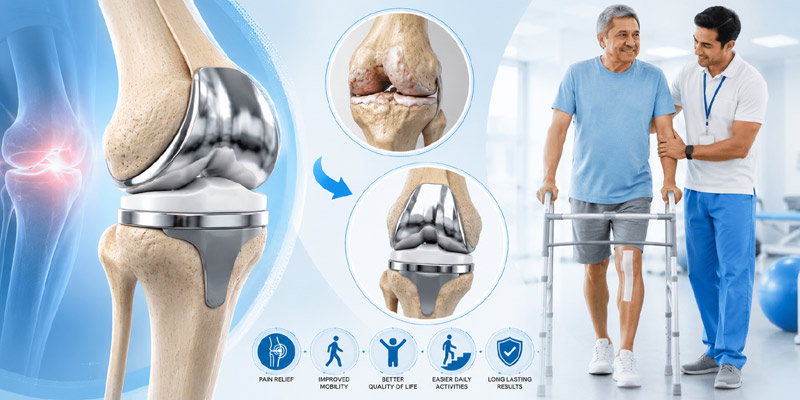
Why does anyone need this in the first place? Usually it comes down to cartilage — the cushioning between your bones — wearing away to the point where bone is grinding against bone. That's genuinely painful, and no amount of physiotherapy can regrow cartilage that's gone. This is the point where most people seriously start researching Knee Replacement Surgery In Chennai instead of just managing symptoms.
Who Actually Needs This Surgery?
Not every ache in the knee means surgery. But certain conditions tend to lead there over time:
- Osteoarthritis – by far the most common reason, basically wear-and-tear that builds up with age
- Rheumatoid Arthritis – an autoimmune condition where the body's own immune system attacks the joint lining
- Post-traumatic Arthritis – arthritis that shows up years after an old injury or fracture
- Severe Knee Damage from years of untreated joint deterioration
- Cartilage Loss that's advanced enough to cause bone-on-bone contact
- Knee Deformity, like bow legs, that throws off your whole walking pattern
If one of these sounds like your situation, and things have been getting worse rather than better, it's worth getting it properly looked at rather than guessing.
Signs It Might Be Time
Patients often ask, "how do I know if I actually need surgery, or if I can wait?" Here's what usually points toward needing a proper evaluation:
- Knee pain that doesn't fully go away even when you're resting
- A limp, or trouble walking normal distances
- Stairs becoming genuinely painful, not just annoying
- Stiffness that limits how far you can bend or straighten the knee
- Visible swelling around the joint
- The knee feeling like it might "give way" underneath you
- Legs that have started to bow outward
- Pain waking you up at night or making it hard to fall asleep
If a few of these are hitting close to home, it's a good time to talk to the Best Knee Replacement Surgeon In Chennai you can find — before the joint damage progresses any further and your options narrow.
The Different Types of Knee Replacement
Not everyone gets the same surgery, and that's a good thing — it means treatment can be matched to how much damage there actually is:

Total Knee Replacement (TKR)
For advanced arthritis affecting the whole joint surface.

Partial Knee Replacement (PKR)
A smaller, less invasive procedure when damage is limited to one part of the knee.

Bilateral Knee Replacement
Both knees treated, either together or in two separate surgeries depending on your health and preference.
Revision Knee Replacement
For patients whose earlier implant has worn out or needs to be corrected.
Figuring out which one applies to you takes a proper clinical exam and imaging — it's not something to guess at from symptoms alone.
What People Actually Notice After Recovery
Ask patients a few months out from surgery what changed, and you'll hear a fairly consistent list:
- The pain that had become "normal" is finally gone
- Walking feels steady again, not guarded
- Getting around — stairs, getting up from chairs, walking outdoors — gets noticeably easier
- Sleep improves because the knee isn't throbbing at night anymore
- A lot of independence comes back, especially for patients who'd started relying on others for basic tasks
- Overall day-to-day life just feels better
- Modern implants are built to last, so this isn't a short-term fix
How Dr. Jeshwanth Netaji Approaches Each Case?
Patients aren't run through a fixed assembly line. Every knee replacement at Jeshwanthortho goes through:
- A hands-on clinical examination to understand joint movement
- Digital X-rays to see the extent of bone and joint damage
- MRI scans when needed for soft tissue, ligaments, or cartilage
- Careful implant selection matched to bone structure & activity
- Detailed surgical planning prior to procedure
- Navigation and alignment techniques for precise positioning
- Strict infection prevention protocols throughout
- Early mobilization for safe movement as soon as appropriate
- Structured rehabilitation continuing well past hospital stay
This is the level of detail that goes into Knee Replacement Surgery In Chennai when it's done properly — not rushed, not one-size-fits-all.
Recovery: What to Actually Expect
Recovery timelines vary a bit person to person, but here's the general shape of it:
Day 1–3
You'll start standing and taking your first assisted steps with a walker, alongside pain management and close monitoring.
Week 1–6
Physiotherapy ramps up here. This is where a lot of the real strength-building happens, along with steady improvements in how far you can bend the knee.
Week 6–12
Most patients notice a real shift — less reliance on walking aids, more confidence in daily movement, and visible progress compared to early weeks.
3–6 Months
By this stage, many people are back at work and easing into light activities again, often with far less pain than they'd had in years.
We stay involved through all of it — adjusting pain management, guiding your physiotherapy, and answering the small questions that come up along the way, because recovery is honestly just as important as the surgery itself.
How Treatment Usually Unfolds
Nothing here is skipped or rushed — each step exists because it changes the outcome.
Questions Patients Ask Us Most
Generally, when the pain, stiffness, or deformity is seriously affecting your daily life and non-surgical treatments have stopped working.
Usually around one to two hours, though it depends on the complexity of your specific case.
Typically a few days, depending on how quickly you're recovering and your overall health.
Most patients take their first assisted steps within a day or two after surgery — earlier than people usually expect.
Yes, that's possible for the right candidates — either in one surgery or as two separate procedures, depending on your health.
If it's been weeks and the usual things — rest, over-the-counter painkillers, taking it easy — haven't made a dent, that's your sign to stop waiting it out. An Orthopaedic Specialist In Chennai can actually work out what's driving the pain instead of you guessing, and get you onto treatment that fits the real cause.
Yes, worth doing. Hip issues have a way of showing up as knee pain, which throws people off for longer than it should. A Hip Replacement Surgeon In Chennai can check both joints properly, figure out where it's actually originating from, and steer you toward whatever treatment genuinely fits — not just the knee, since that might not even be where the problem starts.
Still have a question that's not here? That's what the consultation is for — happy to walk you through anything specific to your case, whether it's about the procedure itself or just understanding your options for Knee Replacement Surgery In Chennai.
Ready to Talk to Dr. Jeshwanth Netaji About This?
Are you facing knee pain that's affecting how you move, sleep, or just get through your day? You don't have to keep working around it — it's worth reaching out to Jeshwanth Ortho.
Get a personalized treatment plan, not a generic recommendation. Same-day evaluations available for new patients.
Reach out and speak with Dr. Jeshwanth Netaji, the Best Knee Replacement Surgeon In Chennai — sometimes the first step is just getting a clear answer about what's actually going on with your knee.