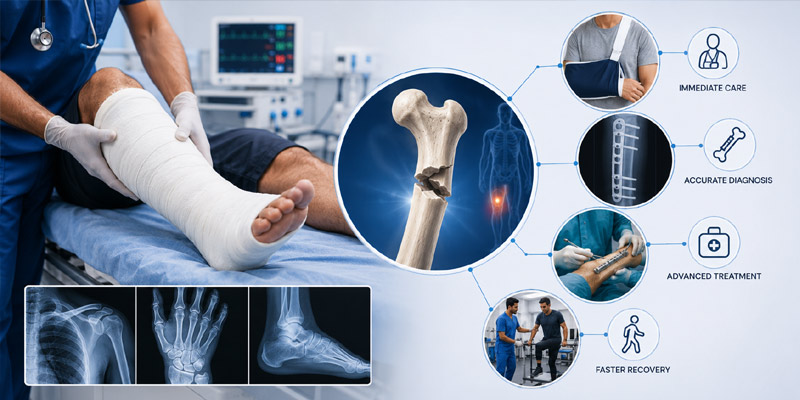
Fractures and trauma can happen suddenly after a fall, road traffic accident, sports injury, workplace injury, or direct impact. Some fractures are simple and stable, while others are complex and require urgent surgical treatment to restore alignment, movement, and function. At Jeshwanth Orthopaedics, we provide expert evaluation and treatment for fractures, complex trauma, and orthopaedic injuries, with a focus on safe recovery and restoration of mobility.
If you are searching for a fracture surgeon in Chennai, trauma surgeon, complex trauma specialist, or fracture surgery in Chennai, it is important to receive timely assessment and the right treatment plan. Our goal is to restore bone stability, protect joints, reduce pain, and help patients return to daily life with the best possible function.
What is Trauma & Fracture Surgery?
Trauma and fracture surgery involves the treatment of broken bones, joint injuries, and musculoskeletal trauma. Treatment may be non-surgical for stable fractures, or surgical when the fracture is displaced, unstable, involves a joint, or affects overall limb function. Fracture surgery may involve fixing broken bones with plates and screws, intramedullary nailing for long bone fractures, external fixation in selected trauma cases, joint reconstruction after injury, treatment of open fractures, and management of complex fractures around the hip, knee, ankle, shoulder, elbow, wrist, or hand. The aim of fracture treatment is not only bone healing, but proper alignment, pain relief, and return of movement and function.

Accurate Fracture Assessment
Detailed clinical evaluation and imaging review help determine the exact fracture pattern, displacement, and soft tissue involvement so the most appropriate treatment — surgical or non-surgical — is selected for each patient.

Stable Fixation & Alignment
When surgery is required, the goal is to achieve correct bone alignment and stable fixation using plates, screws, nails, or wires — restoring the best possible conditions for healing, joint preservation, and return of function.

Structured Recovery & Follow-Up
Recovery after fracture surgery includes pain control, wound care, gradual movement exercises, physiotherapy, weight-bearing progression, and follow-up X-rays to monitor bone healing and restore strength and function.
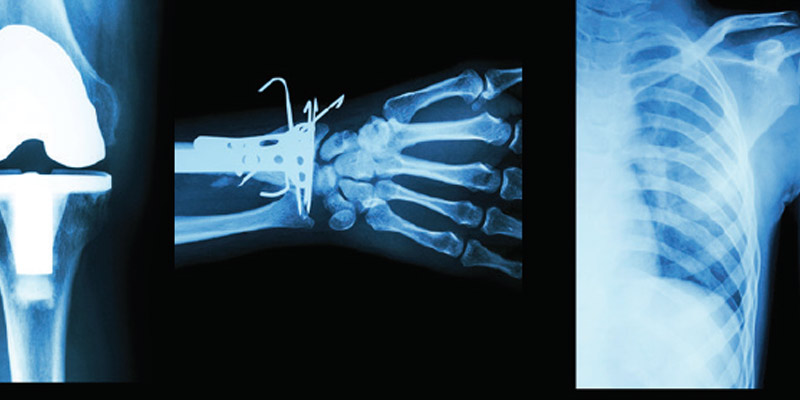
Fracture surgery in Chennai at Jeshwanth Orthopaedics is planned with a function-focused approach, ensuring correct alignment, stable fixation, and a structured rehabilitation programme for the best possible recovery after trauma.
Types of Fractures & Trauma Conditions Treated
We evaluate and treat a wide range of trauma and fracture conditions. Understanding the type, location, and complexity of the fracture is essential before deciding on the most appropriate treatment for each patient.
Leg, Hip & Lower Limb Fractures
Fractures of the femur, tibia, fibula, ankle, foot, patella, and hip can affect walking, standing, and overall limb alignment. These injuries are common after road traffic accidents, falls, or sports trauma and require proper treatment to restore strength, stability, and mobility. Hip fractures in older patients and high-energy femur fractures often need urgent surgical fixation.
Hand, Wrist & Upper Limb Fractures
Fractures of the hand, fingers, wrist, forearm, arm, clavicle, shoulder, and elbow need accurate treatment to preserve grip, fine movement, and daily function. Because the hand and upper limb are essential for everyday activity, alignment and joint surface restoration must be carefully managed to prevent long-term stiffness or deformity.
Complex Trauma & Open Fractures
High-energy trauma from road accidents, polytrauma, fractures involving joint surfaces, fractures with bone comminution, open fractures, and multiple limb injuries require advanced planning and surgical expertise. Open fractures — where the bone or wound communicates with the outside environment — need urgent treatment to reduce the risk of infection and promote proper healing.
Treatment Options for Trauma & Fractures
You should seek urgent specialist assessment if you have severe pain after trauma, swelling and deformity, inability to stand or walk, difficulty moving the injured limb, visible abnormal angulation, an open wound over a fracture site, persistent pain after a fall or accident, numbness or weakness after injury, or finger and hand deformity after trauma. Early diagnosis and appropriate treatment can prevent complications and improve recovery. Treatment depends on the type of injury, bone involved, fracture pattern, soft tissue condition, and patient needs. Some fractures can be treated non-surgically with splint or plaster immobilization, brace support, pain control, follow-up X-rays, and progressive rehabilitation. When surgery is needed, options may include plate fixation, screw fixation, intramedullary nailing, external fixation, K-wire fixation, joint surface reconstruction, or open reduction and internal fixation (ORIF). The choice of treatment depends on achieving the best possible alignment, stability, and functional recovery for each patient.
Our Approach to Trauma & Fracture Care
At Jeshwanth Orthopaedics, trauma care is planned with a focus on accurate diagnosis, clinical evaluation and imaging review, assessment of fracture pattern and soft tissue injury, and careful decision-making between non-surgical and surgical care. Every fracture is different — the right treatment depends on the location of the injury, complexity of the fracture, patient age, activity level, and functional expectations.
Personalized Fracture Treatment Planning
Each patient receives a customized treatment plan based on the specific fracture location, pattern, displacement, soft tissue injury, age, bone quality, and functional goals — whether that is immobilization, minimally invasive fixation, or complex trauma surgery.
Function-Focused Surgical Fixation
When surgery is required, stable fixation with plates, screws, nails, or wires is performed with a focus on correct alignment, joint surface preservation, and early rehabilitation planning — giving the patient the best possible foundation for healing and recovery.
Rehabilitation & Long-Term Follow-Up
Structured post-operative follow-up, physiotherapy guidance, progressive weight-bearing, and serial X-rays to monitor bone healing ensure that every patient recovers safely and regains the best possible movement, strength, and function after fracture surgery.
Got questions? we've got answers!
No. Not all fractures require surgery. Stable, undisplaced fractures can often be treated with splint or plaster immobilization, pain control, and follow-up X-rays. Surgery is recommended when the fracture is displaced, unstable, involves a joint surface, is associated with ligament injury, or cannot be maintained in correct alignment with a plaster or brace. A proper assessment by a fracture surgeon helps determine the most appropriate treatment for each individual injury.
We treat a wide range of fractures including leg, hip, femur, tibia, fibula, ankle, foot, patella, hand, finger, wrist, forearm, arm, clavicle, shoulder, and elbow fractures. We also manage complex trauma injuries, open fractures, periarticular fractures involving joints, polytrauma cases, and multiple fracture injuries after road traffic accidents or high-energy trauma.
Recovery after fracture surgery depends on the bone involved, severity of trauma, type of fixation used, patient age, bone quality, and associated soft tissue injury. Recovery typically includes pain control, wound care, gradual movement exercises, physiotherapy, weight-bearing progression appropriate to the fracture, and follow-up X-rays to monitor bone healing. Proper recovery is essential to restore motion, strength, and function after trauma.
Delayed or improper fracture treatment can lead to malunion, stiffness, joint damage, persistent pain, reduced hand function, or difficulty walking. Early expert care is especially important in complex trauma, leg fractures, and hand fractures, where function depends heavily on correct alignment and fixation. Prompt evaluation by a fracture surgeon can help avoid complications, improve healing conditions, and support the best possible long-term outcome.