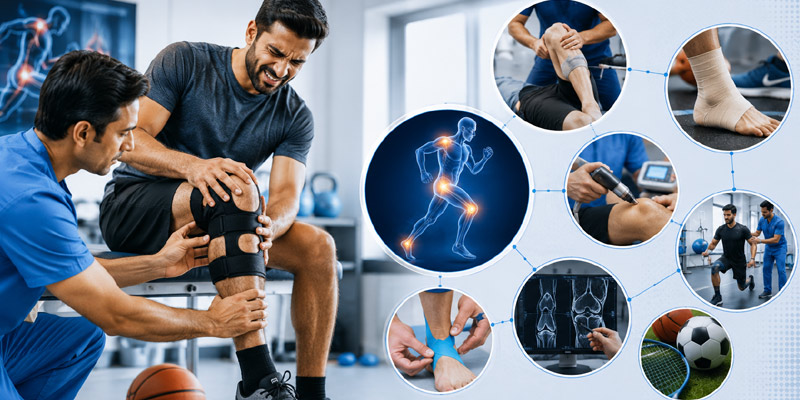
Sports injuries can affect athletes, fitness enthusiasts, students, working professionals, and active individuals of all ages. Pain, swelling, instability, stiffness, reduced performance, or repeated injury may indicate damage to muscles, ligaments, tendons, cartilage, bones, or joints. At Jeshwanth Orthopaedics, we offer focused evaluation and treatment for sports injuries, overuse injuries, ligament injuries, tendon problems, knee and shoulder injuries, and safe return-to-activity planning.
If you are searching for a sports injury specialist in Chennai, sports injury doctor, ligament injury specialist, or injury prevention guidance, a proper diagnosis and individualized treatment plan are essential. Our goal is to relieve pain, restore movement, improve strength, prevent recurrence, and help patients return confidently to daily activities, fitness, and sport. Early care can reduce long-term joint damage and improve recovery outcomes.
What are Sports Injuries?
Sports injuries are injuries that occur during sports, exercise, gym activity, running, dancing, cycling, fitness training, or recreational activities. They may happen suddenly due to a fall, twist, collision, or poor landing, or gradually due to repeated stress and inadequate recovery. Sports injuries may involve ligaments such as ACL, PCL, MCL, ankle ligaments and shoulder stabilizers, meniscus and cartilage injuries inside the knee, muscle strains and tendon injuries, shoulder dislocation, rotator cuff pain and labral injuries, ankle sprain and recurrent ankle instability, stress fractures and overuse bone injuries, and back, hip, groin and hamstring-related sports pain. Some injuries improve with rest, physiotherapy and rehabilitation, while others require imaging, injections, braces, arthroscopy, ligament reconstruction or surgical repair depending on severity and functional demands.

Accurate Diagnosis
Detailed clinical examination, X-ray and MRI review help identify the exact injury — whether ligament, meniscus, cartilage, tendon, muscle or bone — so the right treatment is selected from the start.

Personalized Treatment Planning
Treatment is planned based on the specific injury, severity, age, sport, activity demands and patient goals — whether that means physiotherapy, bracing, injection, arthroscopy, or ligament reconstruction.

Safe Return to Sport
Structured rehabilitation, strength testing, sport-specific readiness assessment and surgeon clearance ensure a safe and confident return to activity, reducing the risk of reinjury.
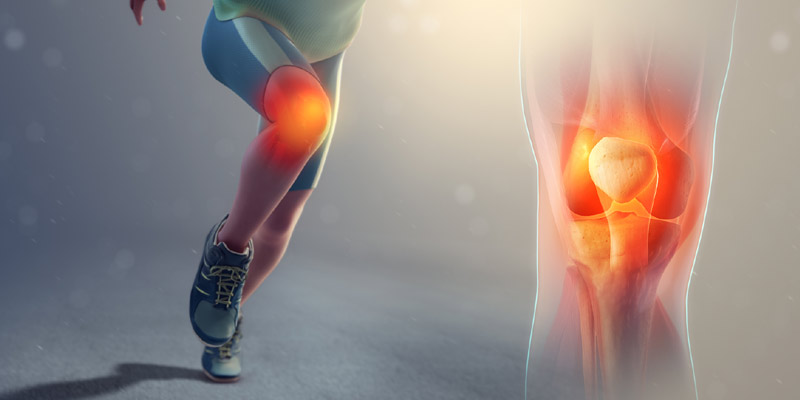
Sports injury treatment in Chennai at Jeshwanth Orthopaedics is focused on accurate diagnosis, evidence-based management, injury prevention and helping every patient return to the activities they enjoy safely and confidently.
Common Types of Sports Injuries
We evaluate and manage a wide range of acute and overuse sports injuries. Understanding the type and severity of the injury is essential before deciding on the most appropriate treatment for each patient.
Knee & Ligament Injuries
ACL tear and knee ligament injuries, meniscus tear and locking knee, patellar dislocation and kneecap instability are among the most common sports-related injuries. These may cause pain, swelling, instability, locking or giving way of the knee, and often require specialist evaluation with MRI to determine the correct treatment.
Shoulder & Upper Limb Injuries
Shoulder dislocation, recurrent instability, rotator cuff injury and shoulder impingement are frequently seen in throwing athletes, cricket players, badminton players, swimmers and gym users. Tennis elbow, golfer elbow and wrist overuse injuries are also common in racquet sport players and manual workers.
Overuse & Tendon Injuries
Ankle sprain and chronic ankle instability, Achilles tendon pain or rupture, muscle strain, hamstring injury, stress fracture, shin pain, cartilage injury and recurrent joint swelling are common in runners, gym users and recreational players. Many overuse injuries develop gradually and respond well to early intervention.
Warning Signs & Treatment Options
You should seek specialist evaluation if you have severe pain after a fall, twist or collision, immediate swelling after injury, knee giving way or repeated instability, locking or inability to fully bend or straighten the joint, inability to bear weight or walk normally, shoulder slipping out or repeated dislocation, persistent pain despite rest and medication, or pain that returns every time you restart sport or gym activity. Ignoring instability, locking, repeated swelling or persistent pain may lead to further ligament, meniscus, cartilage or tendon damage over time. Treatment depends on the exact diagnosis, injury severity, age, activity level, sport demands and patient goals. Many sports injuries can be managed without surgery when diagnosed early and rehabilitated properly. Treatment may include rest, ice, compression and elevation in the early stage, medication for pain and inflammation, bracing, taping or activity modification, physiotherapy and structured rehabilitation, strengthening, balance and return-to-sport training, injections in selected conditions when clinically indicated, or arthroscopic surgery and ligament reconstruction for selected injuries.
Our Approach to Sports Injury Care
At Jeshwanth Orthopaedics, sports injury assessment is planned with attention to the mechanism of injury, clinical examination, imaging, functional limitation and return-to-sport expectations. Every sports injury is different — the right treatment depends on whether the main issue is pain, weakness, instability, locking, tendon damage or overuse.
Injury Prevention & Conditioning
Injury prevention is important for school athletes, recreational players, runners, gym users and those returning after a long break. We provide guidance on warm-up, strength and conditioning, balance training, correct landing technique, gradual training progression and early treatment of warning signs to reduce the risk of ligament, tendon and muscle injuries.
Structured Rehabilitation
Recovery from a sports injury involves pain control, activity modification, physiotherapy-guided rehabilitation, progressive strengthening and balance training, and sport-specific return-to-activity exercises. A successful recovery depends not only on correct treatment but also on carefully staged rehabilitation and patient commitment throughout the process.
Safe Return to Sport
Returning to sport too early increases the risk of reinjury. Safe return requires pain-free movement, adequate strength, good range of motion, balance, confidence and sport-specific readiness. Return-to-sport decisions are made with surgeon and physiotherapy clearance after major injuries or surgery, ensuring the best long-term outcome for every patient.
Got questions? we've got answers!
We evaluate and treat a wide range of sports injuries including ACL tear, meniscus tear, patellar dislocation, shoulder dislocation, rotator cuff injury, ankle sprain, Achilles tendon problems, tennis elbow, stress fractures, cartilage injuries, muscle strains and overuse conditions. Both acute injuries from a fall or collision and gradual overuse injuries from repeated activity are assessed and managed with personalized treatment plans.
No. Many sports injuries can be managed without surgery when diagnosed early and rehabilitated correctly. The correct treatment depends on the type and severity of the injury, the patient's age, activity level and functional demands. A thorough clinical examination along with X-ray or MRI evaluation helps determine whether physiotherapy, bracing, injection, arthroscopy, or ligament reconstruction is most appropriate for each individual patient.
Recovery time depends on the type of injury, its severity, the treatment required, and how well the rehabilitation protocol is followed. Minor sprains and overuse injuries may improve within weeks with proper care, while ligament reconstruction or cartilage surgery may require a more structured and gradual rehabilitation programme before a safe return to sport is possible. A successful recovery depends on both the correct treatment and patient commitment to rehabilitation.
Returning to sport too early increases the risk of reinjury. A safe return requires pain-free movement and walking, no significant swelling after activity, adequate strength compared with the opposite side, good balance and single-leg control, and the ability to perform sport-specific movements without pain or instability. Return-to-sport decisions are made with surgeon and physiotherapy clearance after major injuries or surgery to ensure the best long-term outcome.