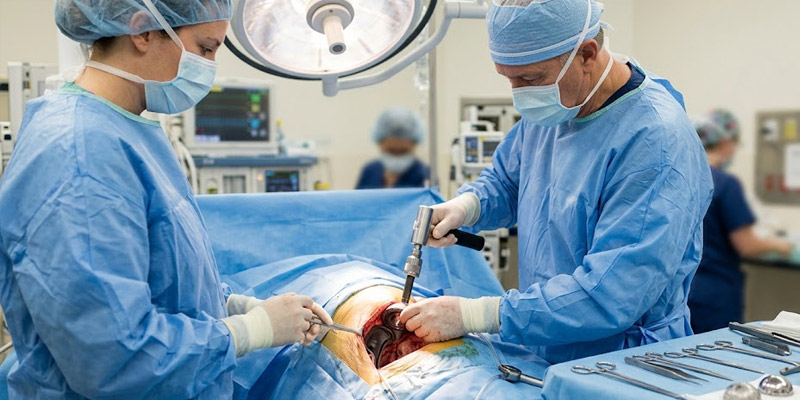
Hip Replacement Surgery in ChennaiJeshwanth Orthopaedics
If hip pain has started dictating how you walk, sit, sleep, or get through an ordinary day, you've probably already tried the usual things — rest, painkillers, maybe a round of physiotherapy. When none of that holds, hip replacement surgery is often what finally gives people their life back. At Jeshwanth Orthopaedics, we see this every week: patients who've quietly adjusted their whole routine around hip pain, not realizing how much of it could actually be fixed.
If you've been searching for a Hip Replacement Surgeon In Chennai, the most important thing isn't finding the fastest route to surgery — it's finding a doctor willing to figure out whether you actually need it, and if so, exactly what kind. That's the approach we take here: relieve the pain, restore movement, and get you back to a life that isn't built around avoiding your own hip.
Why Patients Choose Dr. Jeshwanth Netaji’s Ortho?
The surgeon you choose has a real say in how surgery turns out and how your joint holds up for years afterward. At Jeshwanth Orthopaedics, that means combining careful surgical planning with treatment decisions built around each patient — not a fixed protocol.
If persistent hip pain, stiffness, or reduced mobility have been holding you back, it's worth getting it properly evaluated. Dr. Jeshwanth Netaji is committed to helping you walk, move, and live with confidence again. As an expert Orthopaedic Specialist In Chennai, he also evaluates complex Knee Replacement Surgeon In Chennai cases.
What Is Hip Replacement Surgery?
Hip replacement, or total hip arthroplasty, replaces the damaged parts of the hip joint with artificial implants. It's usually considered once the joint itself has broken down to the point where nothing short of replacement will help — and there are a few common reasons that happens.
The most frequent is osteoarthritis: years of wear gradually strip away the cartilage cushioning the joint, until it's essentially bone grinding against bone. Avascular necrosis is a different story — the blood supply to the head of the femur is cut off, the bone weakens, and it can eventually collapse, leading to severe arthritis of its own. And then there are the patients who've genuinely tried everything else — medication, physiotherapy, injections — and the pain simply hasn't let up, to the point where it's taking over their independence.
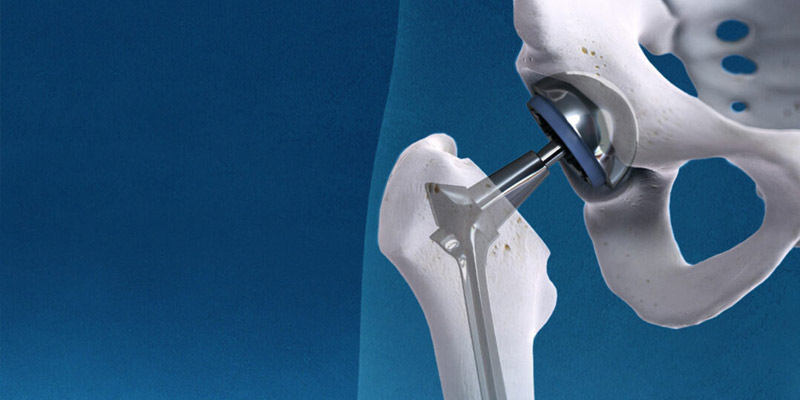
Total hip replacement is one of the most reliable procedures in orthopaedics for relieving this kind of pain, but only when it's the right call for that particular patient. Every recommendation here starts with an honest diagnosis, not an assumption — the same standard you should expect from any Hip Replacement Surgeon In Chennai before agreeing to surgery.
Types of Hip Replacement Surgery
Not every hip needs the same operation. The right approach depends on the joint's condition, the patient's age and bone quality, and how far the damage has progressed.

Total Hip Replacement
Replaces both the socket and the ball of the femur — a full reconstruction of the joint.

Partial Hip Replacement
More limited, usually reserved for elderly patients with hip fractures, where only the femoral head needs replacing.

Revision Hip Replacement
Comes into play when an earlier replacement has started failing — loosening, wear, instability, or infection — and needs to be corrected.
Figuring out which one applies isn't something you can shortcut; it takes a proper evaluation of the joint and the patient together — the kind of evaluation a good Hip Replacement Surgeon In Chennai won't skip, even if surgery seems like the obvious answer.
What Patients Notice After Surgery
The change patients describe most often isn't dramatic on paper — it's things like sleeping through the night again, or walking to the end of the street without stopping. Pain relief tends to come first, followed by better movement, an easing of that limp many patients don't even realize they've developed, and a general return to daily life without constantly working around the joint. Getting there safely, though, depends heavily on the surgeon doing the groundwork properly — accurate diagnosis, careful planning, and realistic expectations set before surgery, not after. That groundwork is exactly what separates a Best Hip Replacement Surgeon In Chennai from a rushed one.
Signs You May Need Hip Replacement Surgery
Not every case of hip pain ends in surgery — plenty don't. But it's worth a proper evaluation if you're noticing:
- Persistent hip or groin pain that doesn't ease with rest, medication, or physiotherapy
- Stiffness that makes ordinary things hard — putting on shoes, sitting cross-legged, climbing stairs
- A visible limp, or one leg that seems to have shortened
- Pain that disturbs your sleep or flares up with the weather
- A walking distance that keeps shrinking because of pain or fatigue
- X-rays showing joint space narrowing, bone spurs, or avascular necrosis
If any of this sounds familiar, it's worth getting it looked at by a Best Hip Replacement Surgeon In Chennai rather than guessing — sometimes it's physiotherapy or medication, sometimes it's surgery, but you won't know which until someone actually examines you.
Recovery After Surgery
Every patient's recovery looks a little different, but most follow a broadly similar arc:
Days 1–3 (Hospital Stay)
You'll be up and standing, and usually walking with assistance, within the first 24 hours — this helps prevent stiffness and lowers the risk of complications.
Weeks 1–6 (Early Recovery)
Walking with a support device, wound care, and a structured physiotherapy routine to rebuild strength and range of motion.
Weeks 6–12 (Regaining Independence)
Daily activities start coming back gradually, walking aids get used less, and strengthening continues.
3–6 Months (Back to Normal)
Most patients are back to their routine and low-impact exercise by now, with strength continuing to build for a while after that.
How quickly someone moves through this depends on age, bone quality, overall health, and — more than people expect — how closely they stick to the rehab plan. This is the kind of week-by-week guidance a Hip Replacement Surgeon In Chennai should be walking you through before you're even on the operating table, not figuring out afterward.
Our Approach
Treatment planning here centers on getting the diagnosis right first: a detailed clinical assessment, X-ray-based evaluation of the joint, careful patient selection, and implant planning built around that specific patient rather than a standard template. Every hip is different, and the right treatment depends on what's actually causing the pain, how far the joint damage has progressed, and what the patient realistically needs to get back to.
That means detailed pre-operative planning, attention to leg-length restoration and implant selection for outcomes that hold up over time, mobilization starting from day one to support circulation and rebuild confidence in walking, and structured follow-up afterward so recovery stays on track and nothing gets missed. It's this level of planning, patients tell us, that made them see us as the Best Hip Replacement Surgeon In Chennai for their situation.
Frequently Asked Questions
If you're dealing with hip pain that just won't ease up, these are the questions any Hip Replacement Surgeon In Chennai hears most often — honest answers, not the generic version.
There's no fixed age. It depends on how far the joint has worn down, your bone quality, and how much the pain is affecting your daily life — though most patients who need it are over 50, age on its own has never been the deciding factor.
It's the question almost everyone asks first, and it's a fair one. Modern anaesthesia and pain-management protocols keep things well controlled, both during surgery and in the days after. Most patients are surprised by how quickly the pain they came in with starts to fade — many notice real relief within a few weeks.
Typically about 1 to 2 hours, though it can run longer or shorter depending on how complex the case is.
Quite a lot — fracture treatment, sports injuries, arthritis care, spine issues, pediatric orthopaedic concerns, plus knee replacement surgeries, with physiotherapy and rehab support built in. Come consult a top orthopaedic specialist in Chennai at our clinic and we'll take it from there.
With proper care and regular follow-up, today's implants commonly last 15 to 20 years, sometimes longer, depending largely on activity level and overall health.
Sooner than most people expect. Many patients are walking with support within a day of surgery, then build up strength over the following weeks with physiotherapy until walking without aids feels natural again.
For most patients, yes — it brings lasting pain relief and restored function for many years. Like any mechanical joint, the implant may eventually wear and need revision surgery, but that's usually many years down the line.
Total hip replacement replaces both the socket and the femoral head. Partial hip replacement only replaces the femoral head, and is usually done for certain hip fractures rather than arthritis.
Ready to Talk to Dr. Jeshwanth Netaji About This?
Every hip is different, and so is every recovery. Talking it through with an experienced Best Hip Replacement Surgeon In Chennai tends to make the decision a lot clearer — no generic advice, just a plan built around your actual hip.
Every week you wait is another week of working around pain that likely has a real solution. Let's find out what yours actually is.
Reach out and speak with Dr. Jeshwanth Netaji, the Best Hip Replacement Surgeon In Chennai — sometimes the first step is just getting a clear answer about what's actually going on with your hip.