
Medically reviewed by Dr. Jeshwanth Netaji, Orthopaedic Specialist (AIIMS-trained), Jeshwanth Orthopaedics, Chrompet, Chennai — specializing in sports injuries and joint replacement
A knee replacement consultation never feels long enough. Recovery, cost and life at home tend to come up last. There is rarely time left to ask everything you meant to.
You describe the pain, the surgeon looks at the X-ray, someone says “replacement,” and ten minutes later you’re in the corridor thinking: I never asked about the procedure. Or the implant. Or how many days I’d be in hospital.
Put your knee replacement surgery questions on paper before you walk in.
Questions to ask before knee replacement surgery: a 10-point checklist
Where exactly is the damage? Please show me on my scan.
Did my non-surgical treatment get a proper trial?
What if I wait another year?
Would a partial or a total replacement suit my knee, and what makes you say so?
Which implant are you planning to use ( imported or indian), and why?
After surgery, can I still sit on the floor or squat?
How many knee replacement vaZ s does your team perform in a year?
What could go wrong, and what is most likely in my case?
By next year, which activities can I go back to?
Can you put the cost in writing, with inclusions and exclusions?
Do you need the operation yet?
Often, not yet. Knee pain by itself isn’t a reason to operate. Many people manage for years with:
Weight loss
Physiotherapy
Anti-inflammatory tablets
The occasional injection
Most people get here through osteoarthritis. Rheumatoid arthritis, an old fracture that damaged the joint, or bow legs carried for decades can do the same. By then the cartilage is largely gone, bone grinds on bone, and the knee decides how your day goes.
X-rays don’t settle it. One person’s ugly film belongs to a knee that still walks fine, while another’s “moderate” film comes with months of bad nights. That’s where an orthopaedic specialist in Chennai starts. How far can you walk? What do stairs feel like? Does the pain wake you?
Don’t sit on these symptoms:
Pain at rest or at night
A limp that keeps getting worse
Swelling or morning stiffness that lingers
A knee that gives way when you stand or turn
Visibly bowed legs
Hot, red and swollen with fever? Can’t stand on the leg after a fall? Get seen today, not next week.
Questions about your knee and the alternatives
The scan: Ask to see the damage on your own scan. Damage limited to one compartment of the knee may allow a partial replacement. Damage spread across the joint usually calls for a total one.
Non-surgical treatment: Several weeks of physiotherapy, weight control and regular medicines make a fair trial.
Waiting: Sometimes fine. With a marked deformity, waiting too long can make the operation harder.
Alternatives: A younger, active patient with a bowed leg and damage on one side may be offered an osteotomy, which realigns the bone.
Success: Good pain relief is the usual result. Some still have pain or stiffness.
Questions about the operation and implant types
Total or partial? Ask why, and expect a reason specific to your knee.
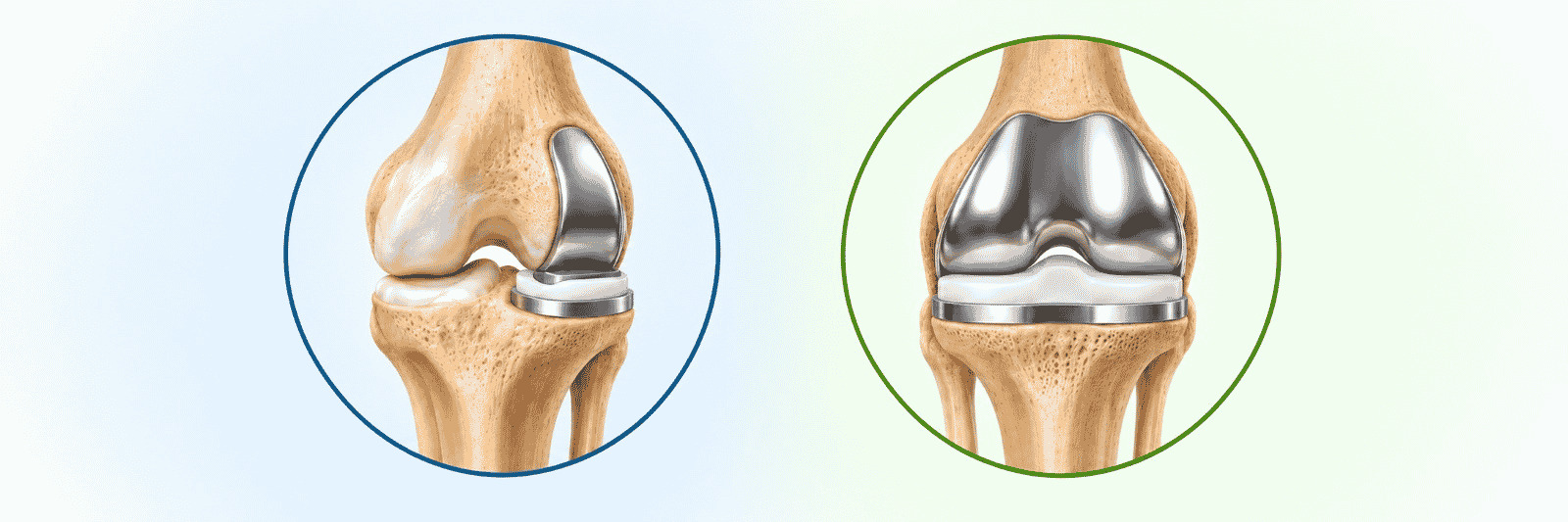
“Total knee arthroplasty” on a report simply means total knee replacement.
Implant types. Most are metal with a medical-grade plastic surface. The real question is fit for your age, weight, bone quality and activity.
Robotic total knee replacement. The robot helps with planning and alignment, but better long-term results than conventional surgery aren’t firmly established.
The floor. Deep bending is often limited after replacement. Squatting and cross-legged sitting may not fully return. In many homes the floor is part of daily life: prayer, cooking, meals, an Indian-style toilet. Ask before you consent.
Questions to ask your orthopaedic surgeon
More questions for the surgeon:
What’s your training in joint replacement?
Which hospital, and what does my room include?
Who handles problems after I go home?
Searching knee replacement surgery in Chennai brings up plenty of reputations. Training, and how a surgeon deals with complications, are what you can actually check. Be wary of vague answers, no mention of alternatives, or a date fixed in a hurry.
Get your health in order first
Diabetes, blood pressure and anaemia need to be under control before surgery. Smoking and extra weight raise the risk too. Treat any dental or urinary infection that is causing symptoms beforehand, because infection elsewhere in the body can reach the new joint.
List every medicine and supplement you take, including blood thinners and diabetes tablets, and mention any metal allergy. Never stop one without your surgeon’s say.
Risks and complications of knee replacement
Any operation carries risk. After a knee replacement, the usual worries are infection, a clot in the leg, a stiff knee and pain that goes on longer than it should. Less common are a clot reaching the lung, injury to a nerve or blood vessel, and a fracture around the implant. Implants can wear or loosen with time, and a few patients need a second operation. Anaesthesia has its own risks. Antibiotics, clot prevention and early walking are the main safeguards.
Recovery time and physiotherapy
Recovery follows a rough sequence, though you may move faster or slower:
Day one or two: first steps with a walker
First six weeks: physiotherapy builds up
Weeks four to twelve: walking aids needed less
Three to six months: back to light activity, and to desk work earlier than heavy work
Swelling and stiffness can last for months. Most people need six months to a year to feel fully recovered, and some take longer. Ask who will guide your physiotherapy.
Don’t wait if you notice fever, a wound that turns red or leaks, a hot swollen calf, sudden breathlessness or chest pain. Phone your surgeon or go to hospital the same day. Any of these can point to infection or a clot.
Cost of knee replacement
What you pay depends on the hospital, room category, implant, surgeon’s fee, days in hospital and rehab. Get a written estimate that says what it covers and what it doesn’t. If you’re insured, check whether the insurer must approve it before a date is set.
Patients also ask
Is knee replacement surgery painful?
Yes, at first, but medicines and early movement help control it. Long term, most people are much better off.
What is the best age for a knee replacement?
There isn’t one. Pain, daily limitation and general health decide. Younger patients need more caution, since the implant has to last longer.
What can’t you do after a knee replacement?
Avoid running and jumping, as a rule. Deep squatting and kneeling can stay hard too.
When can I walk normally after knee replacement?
You walk with a walker within a day or two. Many people stop using walking aids after four to six weeks, though some need them for longer.
How long is knee replacement surgery?
Usually one to two hours, followed by a few days in hospital.
Plan your knee replacement consultation
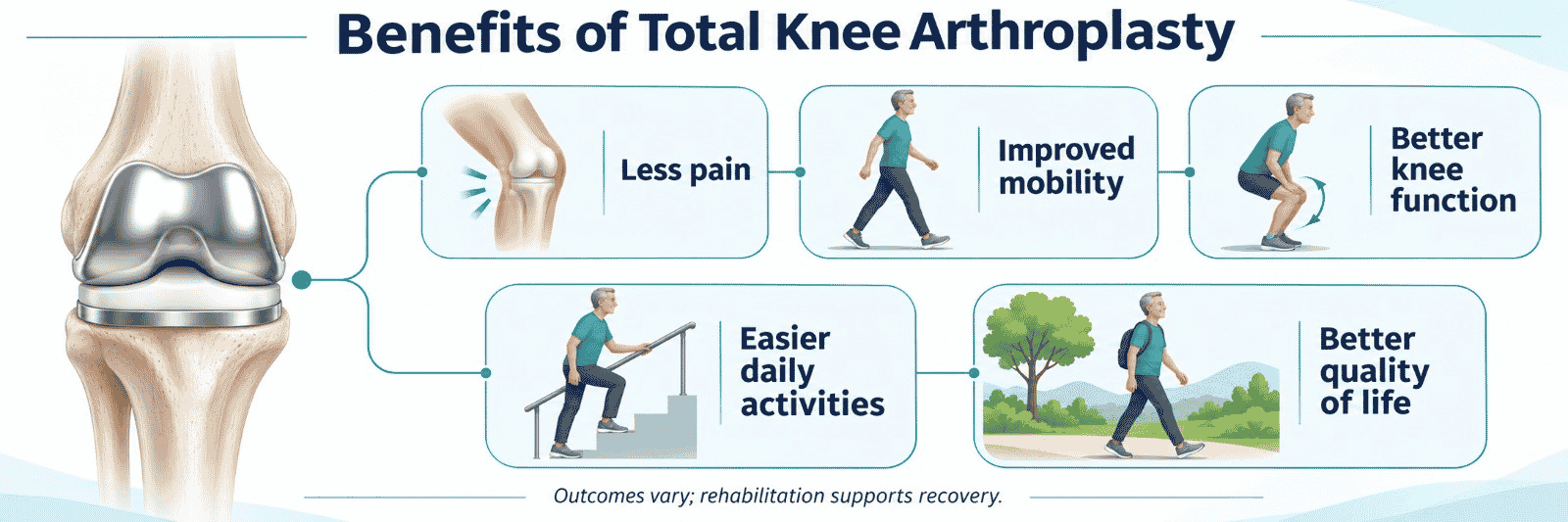
If stairs, the walk to the shop or a night’s sleep already cost you more than they should, don’t keep putting it off. Worn cartilage doesn’t grow back, and long delays can make surgery harder.
Bring your scans, old reports, medicine list and this list of knee replacement surgery questions. At Jeshwanth Orthopaedics in Chrompet, Dr. Jeshwanth Netaji will examine the knee, tell you whether non-surgical care, a partial or a total replacement suits you, and take your questions before anything is decided. Want that conversation? Book a consultation.
Have Questions About Your Joint Health?
Get a personalized evaluation with Dr. Jeshwanth Netaji, AIIMS-trained Joint Replacement & Orthopaedic Specialist in Chrompet, Chennai.
Call +91 70100 73627 to Book