Dr. Jeshwanth Netaji, Consultant Orthopaedic Surgeon · Jeshwanth Orthopaedics, Chromepet
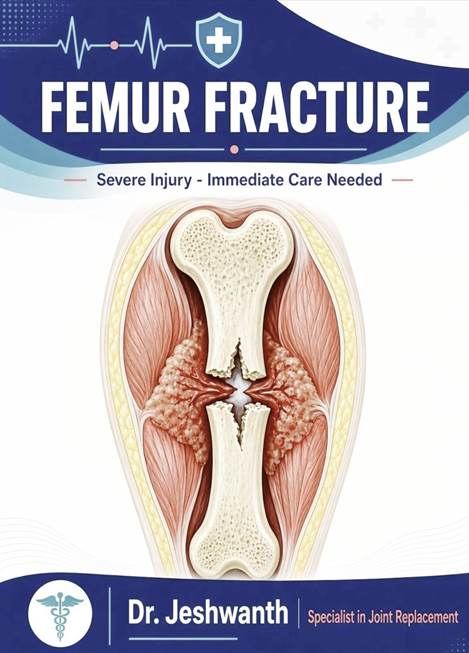
A femur (thigh bone) fracture is a severe injury that needs immediate care.
A crush injury at work
A patient with no previous medical problems came to us after their right thigh and knee were crushed in an accident at work. The leg was bleeding, the pain was severe, and the knee could not be moved without pain.
With timely surgery and early physiotherapy, the patient was up and moving well and went home three days after the operation. Today they walk, squat and sit cross-legged on the floor. Here is what happened, in plain words, and what it means if you or someone you love has a similar injury.
Shared with the patient’s consent. Identifying details have been removed.
What was injured
The thigh bone (femur) was broken into several pieces just above the knee, and the bone was exposed through the wounds. Doctors call this an open Grade III-B comminuted distal femur fracture. In simple terms:
Distal femur – the lower end of the thigh bone, which forms the top of the knee joint.
Comminuted – the bone is broken into more than two pieces.
Open – the skin is torn, so the broken bone is in contact with the outside. This carries a high risk of infection.
Grade III-B – a severe open injury with major damage to the skin and muscle covering the bone.
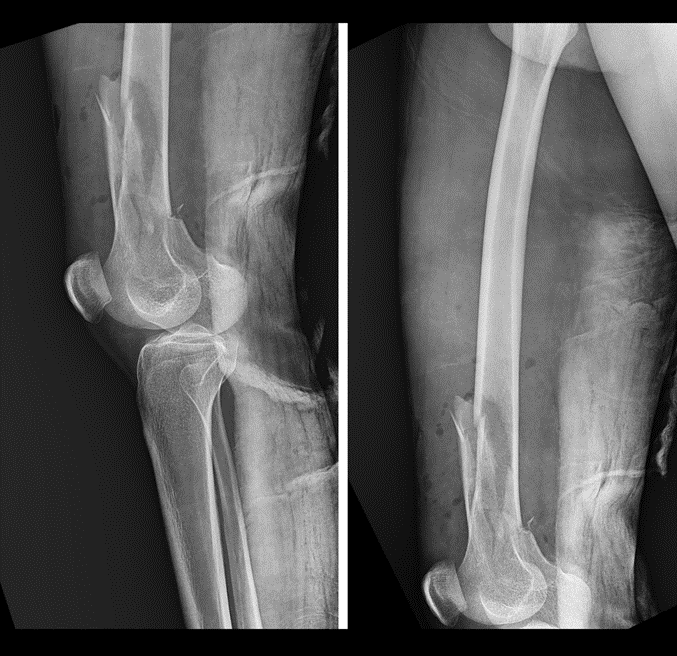
X-rays on arrival: the lower end of the thigh bone is broken into several pieces just above the knee.
The patient had three puncture wounds on the inner thigh and one large wound, about 8 cm long, on the outer thigh, along with abrasions and imprint burns from the crushing force.
There was also good news. The blood supply and nerves to the leg and foot were intact, and the patient had no head, chest or other injuries.
How we fixed it
Four days after the injury, the patient underwent surgery to put the broken pieces of bone back together and hold them firmly in place.
Open reduction and internal fixation (ORIF) – through an incision, the bone fragments were lined up in their correct position (reduction) and fixed with a metal implant (internal fixation).
A 13-hole distal femur locking plate – a long titanium plate shaped to fit the lower thigh bone, held with screws that lock into the plate. Locking plates give a strong hold even when the bone is in many pieces near the knee.
Muscle repair – the vastus lateralis, the large muscle on the outer side of the thigh that was torn in the injury, was stitched back together.
Fixing the bone firmly lets the knee start moving early, which is the key to avoiding a stiff knee later.
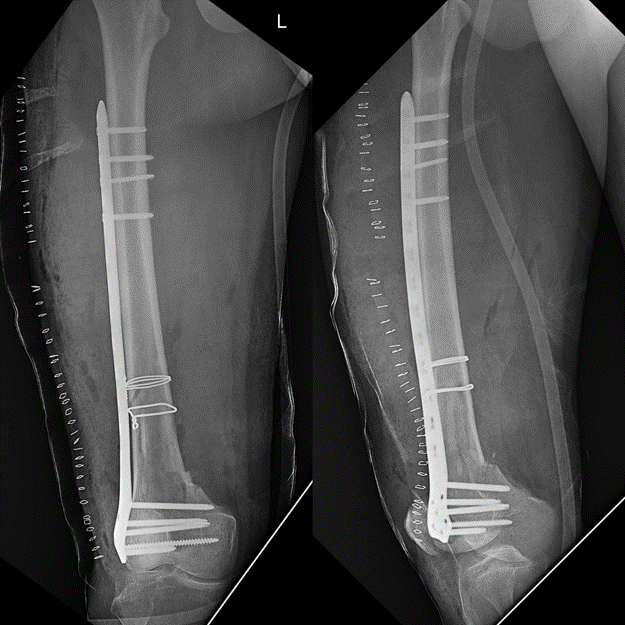
X-rays after surgery, front and side views: the titanium plate and locking screws hold the fragments in place
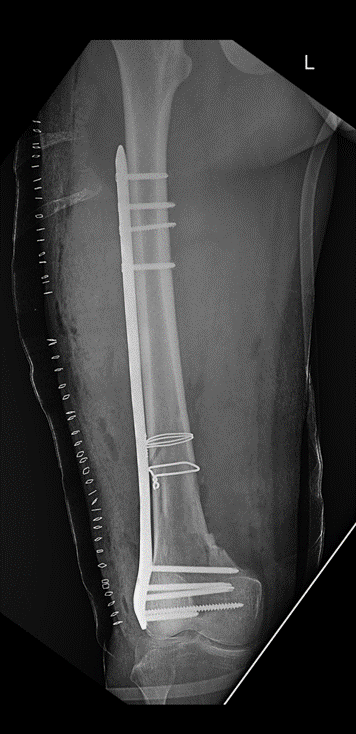
Front view of the whole thigh bone after fixation. The skin staples along the outer thigh close the surgical wound.
The road to recovery
Recovery went smoothly, with no complications after surgery. The patient went home three days after the operation, feeling better and moving around well.
While in hospital, the patient received:
Antibiotics through a drip, to protect against infection, which is the biggest risk with an open fracture.
Pain relief through a drip, so that physiotherapy could start early and comfortably.
Physiotherapy from the first days, to get the knee bending and the thigh muscles working again.
Before going home, we explained why physiotherapy must continue. Skipping it can lead to three problems:
A stiff knee that does not bend or straighten fully.
A changed walking pattern, such as a limp.
Slower bone healing.
A bone broken this badly takes several months to heal fully. Regular check-ups and X-rays let us decide when it is safe to put more weight on the leg, and every patient’s plan is tailored to their own healing.
The outcome
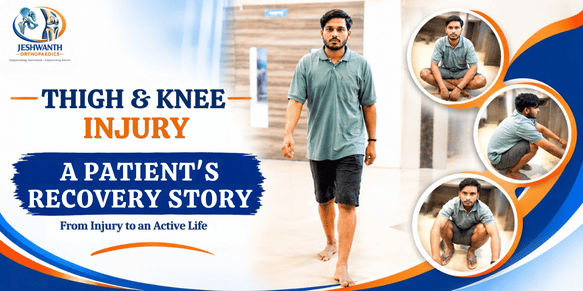
At follow-up, the patient walks on their own and has regained good, comfortable knee movement. They can squat and sit cross-legged on the floor, positions that need the knee to bend fully.
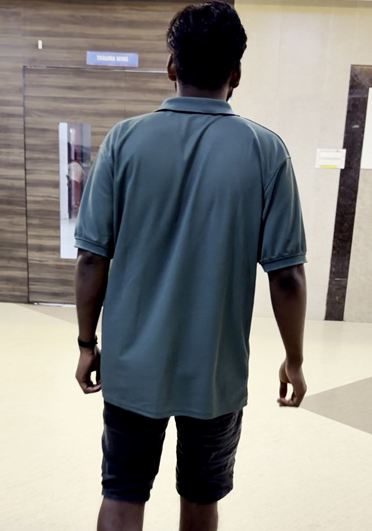
Walking independently at follow-up.
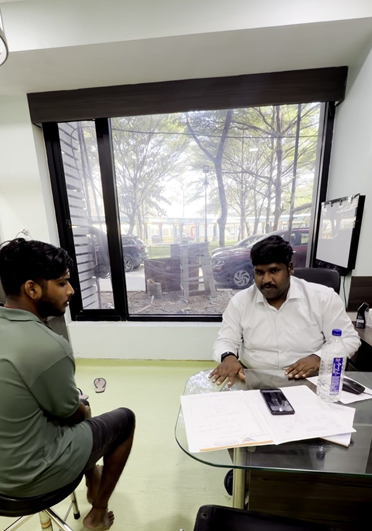
Follow-up review in clinic.
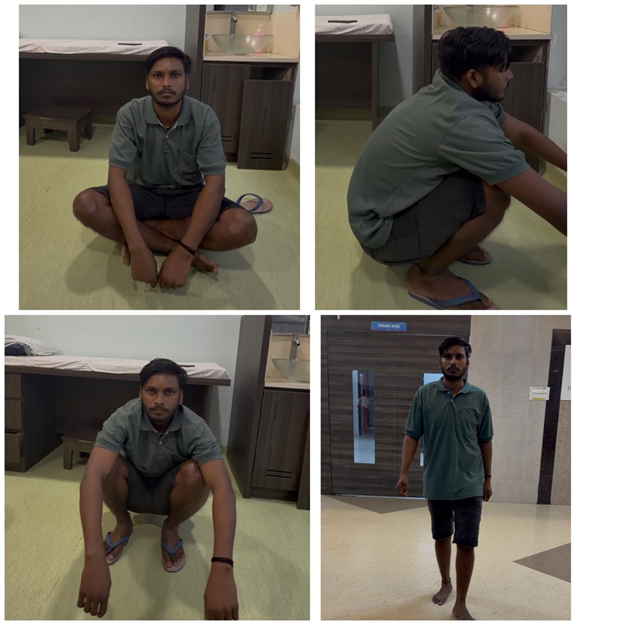
Sitting cross-legged, squatting and walking: signs of a well-healed, freely moving knee.
What this means for you
A serious thigh and knee injury can still have a good outcome when it is treated quickly and the patient stays committed to rehabilitation.
See an orthopaedic surgeon urgently if, after an injury, you notice:
A wound near a possible broken bone, or bone visible through the skin
Severe pain, swelling or an odd shape of the thigh or knee
Inability to bend the knee or stand on the leg
Numbness, tingling, or a cold or pale foot
An open fracture is an emergency. Cover the wound with a clean cloth, keep the leg still and go to the nearest hospital straight away.
Have Questions About Your Joint Health?
Get a personalized evaluation with Dr. Jeshwanth Netaji, AIIMS-trained Joint Replacement & Orthopaedic Specialist in Chrompet, Chennai.
Call +91 70100 73627 to Book