Medically reviewed by Dr. Jeshwanth Netaji, Orthopaedic Specialist (AIIMS-trained), Jeshwanth Orthopaedics, Chrompet, Chennai — specializing in knee and hip replacement
Ask most patients what they're afraid of when their hip starts acting up, and the answer is almost always the same: surgery. In reality, that's rarely where things end up.
More often, what brings someone in is a dull ache after a long walk, a twinge getting out of the car, or morning stiffness. For many, the fix isn't an operating table — it's physical therapy, the right medication, and a few overdue changes to daily habits.
The real questions worth asking are: what's causing the pain, what helps without surgery, and when does an operation become necessary?
What Causes Hip Pain?
The joint itself isn't always where the trouble starts. Sometimes it's a muscle, a tendon, or a nerve that's flaring. Occasionally it's the lower back sending pain downward while the hip is fine.
The causes seen most often:
Osteoarthritis — cartilage wearing thin, usually past age 50
Bursitis — the small fluid sacs near the joint becoming inflamed
Tendinitis — tendon irritation from overuse
Muscle strain — from a fall, a twist, or overdoing it at the gym
Labral tears — damage to the cartilage rim that stabilises the joint
Referred pain from the spine — which can mimic hip trouble even when the hip itself is fine
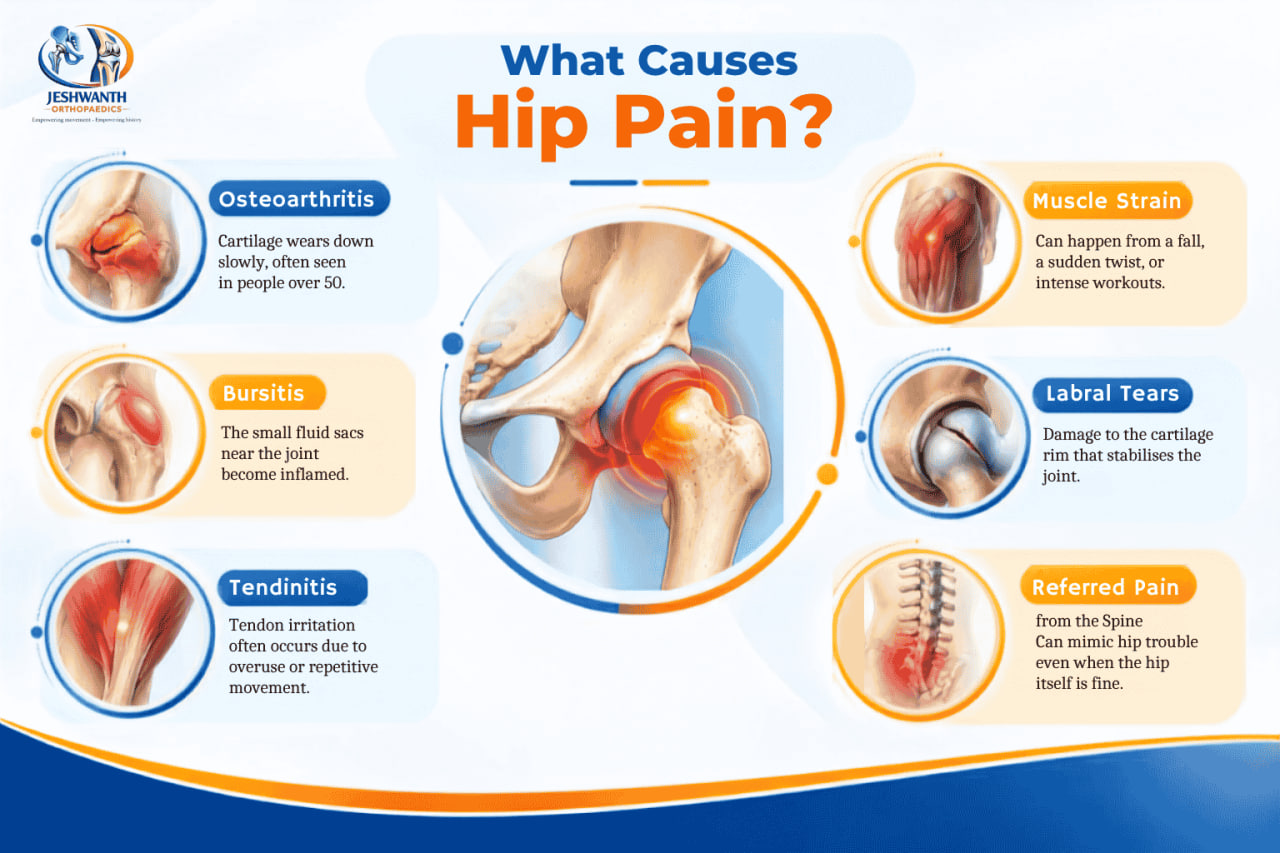
Working out which one is at play isn't a formality. Arthritis and a strained muscle can feel nearly identical on a bad day, but the treatment for each is very different.
Is Hip Pain Without Surgery Possible?
For most patients, yes. It usually comes down to a combination of:
Physical therapy, to rebuild strength and support around the joint
Medication, used when it's actually needed rather than around the clock
Some honest rethinking of daily activity
Occasionally an injection, when inflammation won't calm down on its own
Surgery gets discussed once a joint has broken down considerably, or after a genuine, months-long attempt at conservative care hasn't worked.
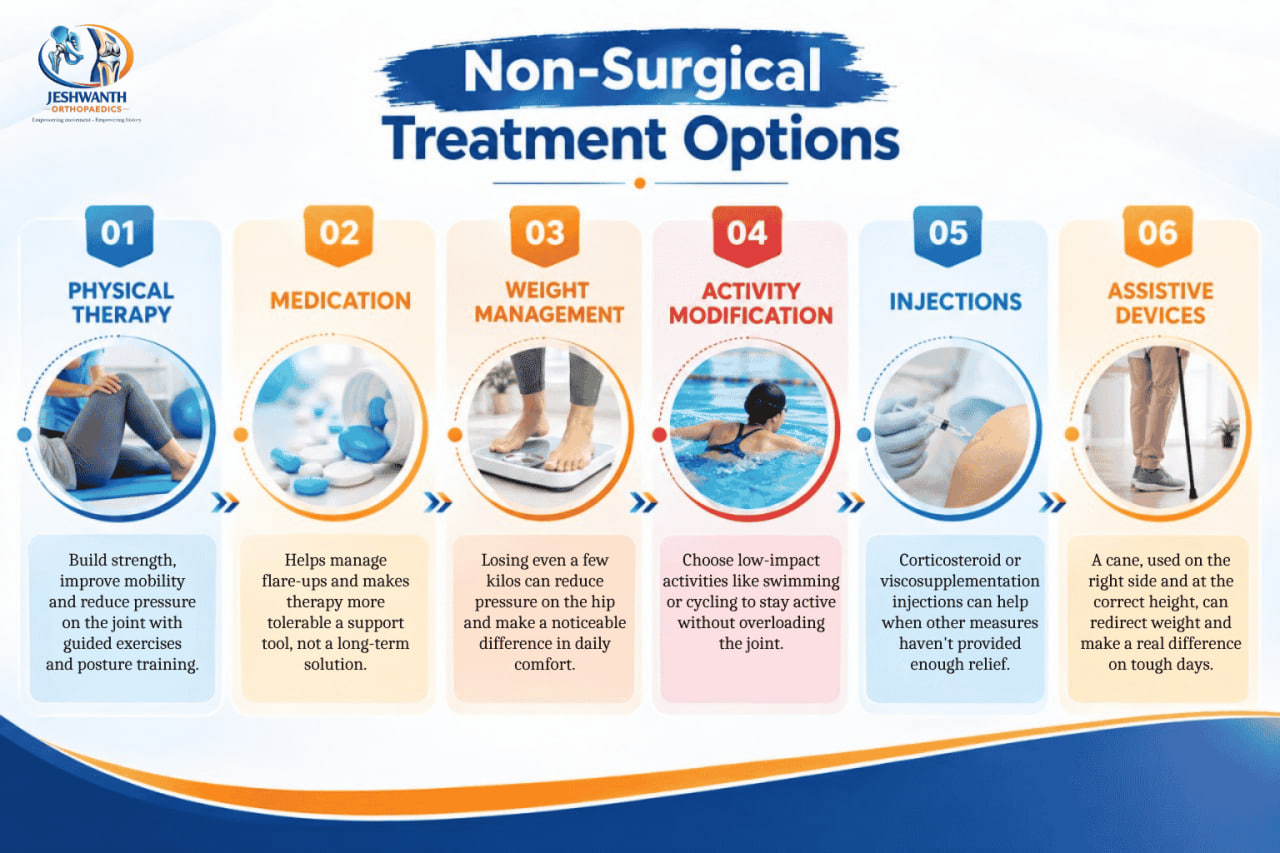
Non-Surgical Treatment Options
1. Physical Therapy
This is usually where treatment starts. Building strength around the hip takes pressure off the joint, and a lot of pain that feels structural clears up once that support improves.
A physiotherapist will typically work through:
Range-of-motion exercises
Hip and core strengthening
Gait correction
Posture retraining
The patients who improve fastest aren't necessarily the ones pushing hardest — they're the ones who keep showing up week after week instead of going all-out for three days and giving up.
2. Medication
Anti-inflammatory medication earns its place during a flare-up, mainly by making therapy tolerable enough to actually do. It's a support tool, not the treatment itself.
3. Weight Management
Every step routes several times a person's body weight through the hip. Losing even a few kilos and keeping it off is often enough for the joint to feel noticeably different day to day.
4. Activity Modification
Swapping running for swimming or cycling keeps a person active without hammering the joint every single time they exercise.
5. Injections
Corticosteroid or viscosupplementation injections can help when moderate arthritis or inflammation hasn't responded to the basics. They typically come in after therapy, medication, and activity changes have had a real shot first.
6. Assistive Devices
A cane, held on the correct side and set at the right height, redirects more weight off a painful hip than most people expect — a small change that can make a real difference on a rough week.
Getting to the Right Diagnosis
Because hip pain can come from so many different sources, an accurate diagnosis is where any sensible treatment plan has to start. A thorough clinical work-up always comes before recommending a single exercise or medication. A first visit typically covers:
A physical exam for movement, strength, and tenderness
Imaging such as an X-ray or MRI, when it's called for
A look back at daily habits, activity levels, and past injuries
None of this is optional box-ticking. A clear picture of what's causing the pain usually separates a treatment plan that works from one that just manages symptoms. Timing matters too — those checked within the first few weeks generally do better than those who wait months hoping it settles on its own.
Non-Surgical vs Surgical Treatment: A Quick Comparison
When Does Surgery Become Necessary?
For some patients, conservative treatment simply doesn't get the job done. This is usually the case when:
Imaging shows real cartilage loss or joint damage
Pain hasn't budged after months of genuinely consistent treatment
Walking or sleeping has turned into a daily struggle
There's something structural — a severe fracture, for instance — that therapy alone won't correct
At that stage, the conversation shifts to whether a partial or total hip replacement makes sense — a decision best made with a Best Hip Replacement Surgeon In Chennai who can assess the joint directly rather than going by symptoms alone.
Hip and knee joints often wear out together, especially in older patients with arthritis in more than one joint. It isn't unusual for someone managing advanced hip pain to also notice changes in the knee, which is where Knee Replacement Surgery In Chennai sometimes enters the conversation too.
Tips to Support Hip Health
Keep up with prescribed stretches even after the pain settles
Avoid sitting in one position for long stretches at a time
Choose footwear that actually supports the foot, not just looks the part
Warm up before activity, even something as ordinary as a walk
Don't brush off early stiffness — it's easier to manage before it turns chronic
Signs You Shouldn't Ignore
Most hip pain isn't an emergency. A handful of things are, though, and they're worth acting on immediately rather than waiting out the week:
Sudden, severe pain following a fall or injury
Not being able to put any weight on the leg
A visibly deformed hip, or a leg that looks shorter or turned
Fever alongside hip pain and swelling
Pain sharp enough to wake you at night, with no relief from rest
Any single one of these is reason enough to get seen quickly rather than trying home remedies first.
Frequently Asked Questions
Can hip pain go away without surgery?
Often, yes — especially when caught early. Physical therapy, sensible medication, and lifestyle changes handle most cases.
What are the non-surgical options for hip pain?
Physical therapy first, then medication, weight management, and activity changes. Injections come in occasionally for short-term relief.
Is hip replacement surgery always necessary for arthritis?
Not at all. Many patients manage arthritis for years through conservative care. Surgery comes up only once that stops working.
How long does non-surgical hip pain treatment take to show results?
It depends on the cause, but many patients notice improvement within a few weeks of staying consistent.
Can physical therapy alone fix hip pain?
Often, for soft-tissue issues. Whether it's enough depends on the underlying cause — which is why diagnosis comes first.
When should I see a doctor for hip pain?
Two weeks is a fair line. Beyond that, or if it's worsening or affecting sleep and walking, get it checked.
Take the First Step Toward Relief
Most hip pain never reaches an operating room.
A proper diagnosis, consistent physical therapy, and a few practical habit changes are usually enough to move comfortably again. For those searching for a Best Ortho In Chennai, timing matters most — pain left alone for months closes off options later, while pain looked at early responds well to conservative care.
If your pain has lasted more than a couple of weeks, or feels structural, it's worth getting a proper opinion. Book a consultation with Dr. Jeshwanth Netaji at Jeshwanth Orthopaedics for a straightforward evaluation and the right treatment plan for your hip pain.
Have Questions About Your Joint Health?
Get a personalized evaluation with Dr. Jeshwanth Netaji, AIIMS-trained Joint Replacement & Orthopaedic Specialist in Chrompet, Chennai.
Call +91 70100 73627 to Book