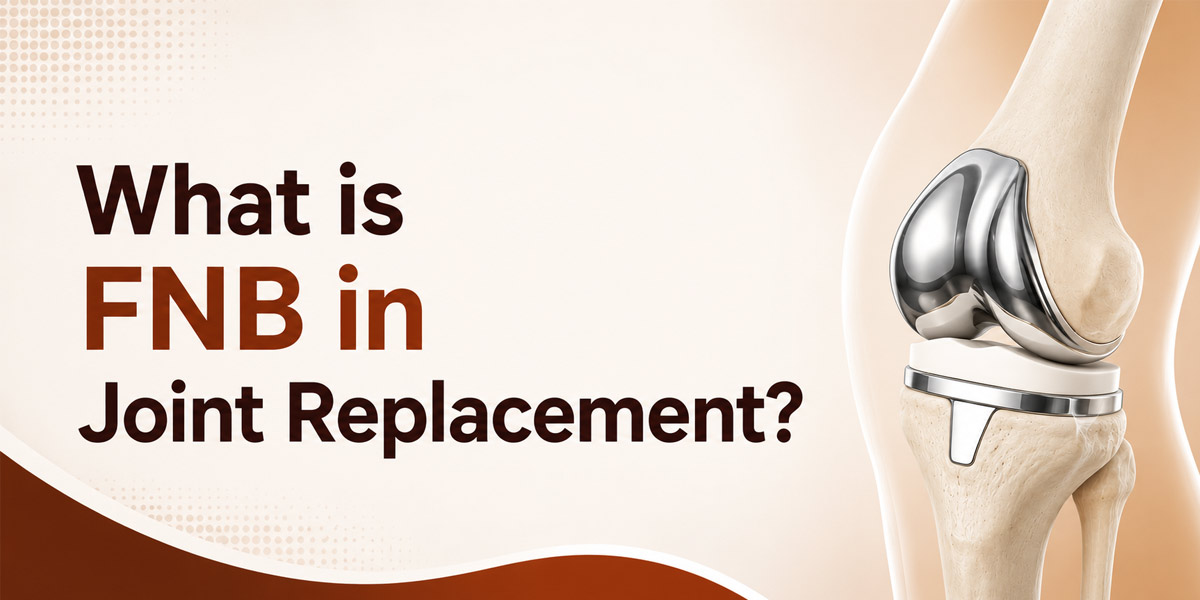
The majority of patients who present with a painful, stiff knee think there is no other way than surgery. This is typically not the case. Knee osteoarthritis is a spectrum condition, and for many people, it can be managed for years — even a lifetime — without needing a knee replacement. This is the same logic we share with our patients in clinic at Jeshwanth Orthopaedics: why the pain starts, what actually slows it down, and when surgery finally becomes necessary.
Why Knee Pain Happens?
Cartilage does the quiet, unglamorous work of the knee joint. It's a smooth layer that lets the femur and tibia glide past each other without friction. Osteoarthritis is what happens when that layer wears faster than the body can maintain it — not an infection, not the kind of inflammation people usually picture, just cumulative mechanical strain outpacing repair and gradually leading to cartilage damage.
A handful of factors drive this process:
Age, which thins cartilage gradually over decades — expected, not necessarily a disease state on its own
Body weight, since load through the knee during walking runs at roughly three to four times body weight
An old injury to the ligaments or meniscus that has not been fully treated
An imbalance of the quadriceps and hip muscles, causing them to take on more of the shock absorbing than the joint does
Stresses over the years from some activities, sports, or squatting intensive exercises
Familiarity with arthritis (family history): This is a risk factor that is not related to lifestyle
We take time to determine the cause first before we make a recommendation for treatment, as it's really a change in the plan. Nearly identical x-rays can be seen in a 34-year-old who has suffered from an old ACL injury with arthritic changes to the knee, and a 60-year-old who has primary age-related arthritis and require markedly different approaches.
The Four Stages of Knee Osteoarthritis
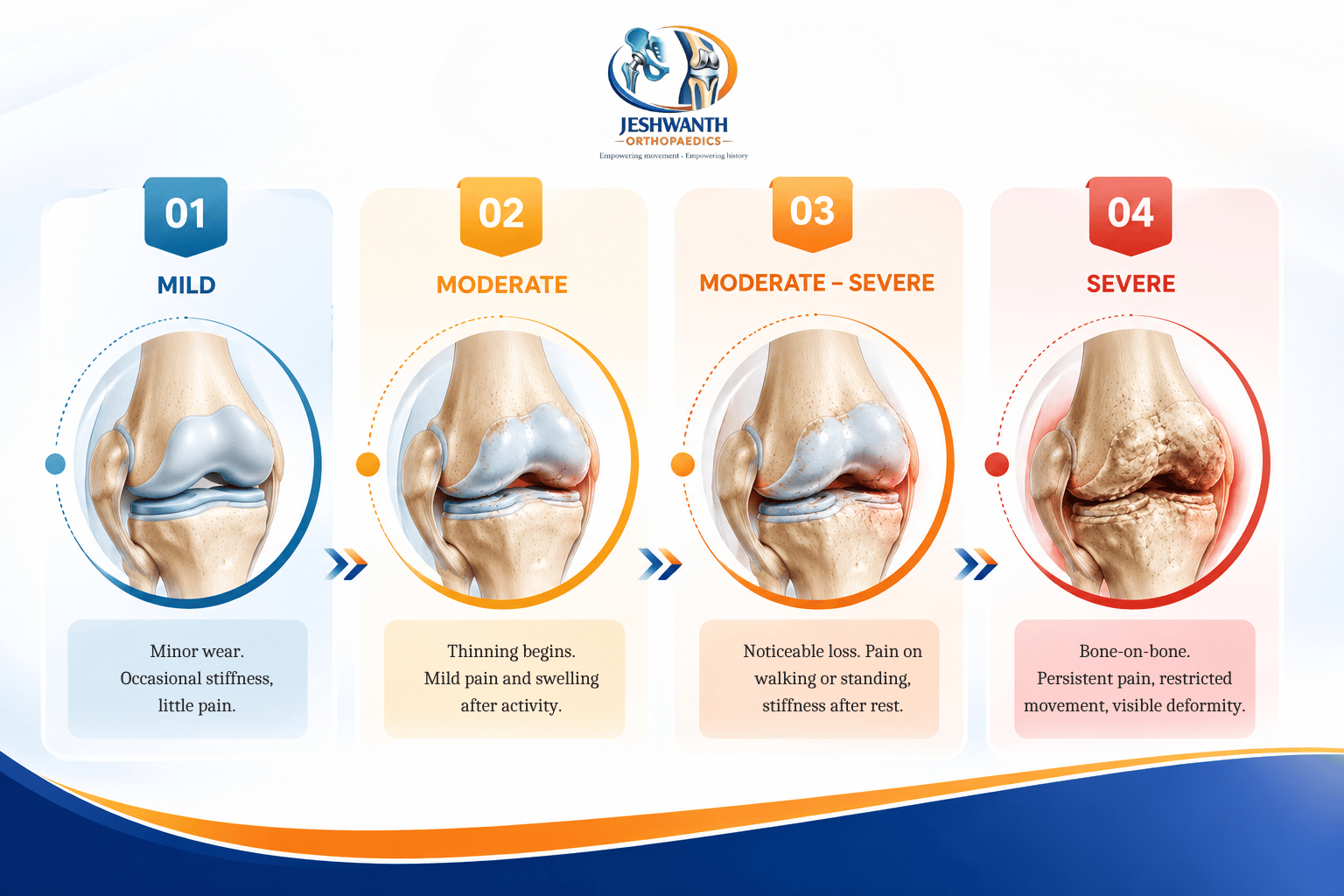
Not every twinge signals that surgery is approaching. Osteoarthritis develops gradually, and we typically describe it across four clinical stages.
Most patients presenting to our clinic with a new knee complaint fall into Stage 1, Stage 2, or early Stage 3 — precisely the range where conservative treatment tends to work well. Stage 4 is a different conversation, one we'll come back to.
How to Avoid Knee Replacement: What Genuinely Helps?
There's no single intervention that substitutes for a worn joint. What works is layering a few habits together and sticking with them for months, not weeks.
Weight Loss Has an Outsized Effect
Because the knee bears roughly three to four times body weight with every step, even a modest drop in weight produces a disproportionate drop in joint load. We regularly see patients notice real relief after losing just 5–10% of their body weight — often before there's much change on the scale itself, simply because the joint is carrying less repeated stress with each stride.
Exercises to Avoid Knee Replacement
The aim of exercise here isn't general fitness — it's building the muscles around the joint so the knee itself carries less of the burden.
Straight leg raises, to strengthen the thigh without loading the joint
Wall sits and controlled mini squats
Stationary cycling, easy on the knees and still useful for conditioning
Swimming or water walking, where buoyancy takes most of the weight off
Basic stretching or yoga, to preserve range of motion
This is where supervised physiotherapy for knee pain earns its place over a generic printout — the exercises themselves are simple, but sequencing and progression matched to your actual stage of disease is what makes them work.
Non-Surgical Options Worth Discussing With Your Doctor
Depending on severity, we often combine a few of these knee replacement alternatives:
Anti-inflammatory medication, mainly for flare-ups
Bracing to offload the affected side of the joint during activity
Strengthening the glutes, hamstrings, and core, and shifting effort away from deep floor-sitting or repetitive stair use
Injections — corticosteroid, hyaluronic acid, or PRP — selected based on stage
Taken together, these form a practical non-surgical knee treatment plan for patients in the earlier and middle stages of osteoarthritis.
Do Injections Genuinely Delay Surgery?
Reasonably often, yes, though we're careful about how we frame this. None of these injections regrow lost cartilage. What they can do, particularly in mild-to-moderate disease, is settle pain for several months at a stretch — a window that matters, because it's during that window that exercise and weight loss actually get a chance to work.
Knee Pain Management Tips for Everyday Life
None of these are dramatic individually, but they add up:
Use stair railings, one step at a time if needed
Choose seating with armrests to ease the strain of standing
Limit long stretches of cross-legged sitting or squatting
Wear supportive, well-cushioned footwear
Apply heat or cold during flare-ups
Keep up your exercises even on days the knee feels fine — this is where most people fall off
A joint responds better to fifteen minutes of daily loading than to one hard workout squeezed in once a week.
Signs That Point Toward Surgery Rather Than Away From It
Conservative treatment has real limits, and recognising them matters as much as pursuing them.
Advanced, Stage 4 bone-on-bone arthritis
Fixed deformity — noticeable bow-leggedness or knock-knees
The knee buckling or feeling unstable
No real improvement after six or more months of supervised non-surgical care
Pain severe enough to consistently disrupt sleep
None of these alone guarantees surgery is next, but together they usually mean it's time for a formal opinion rather than another few months of trial and error.
When to See a Specialist?
Pain lasting more than four to six weeks
Swelling that isn't settling with rest
Difficulty with stairs, floor transfers, or prolonged walking
Pain that wakes you at night
A knee that looks visibly different than it used to
A proper clinical exam paired with imaging is what actually tells us how far conservative care can be pushed — guessing from symptoms alone tends to go wrong in both directions. Our team at Orthopaedic Specialist In Chennai can assess exactly where your knee stands.
Frequently Asked Questions
Is there a way to avoid knee replacement?
Often, yes, especially when arthritis is caught early and managed consistently.
Which exercises help with knee pain?
Low-impact strengthening — straight leg raises, controlled squats, cycling, swimming — supports the joint without added stress.
Is knee replacement the only treatment for arthritis?
No. It's a last resort, used once conservative treatment stops giving enough relief.
How long can knee replacement surgery be delayed?
It varies by patient — some manage for years, others progress faster and need surgery sooner.
Do injections really help avoid surgery?
They can, particularly in mild-to-moderate arthritis, though the relief is temporary rather than curative.
When does knee replacement actually become necessary?
When pain is constant, mobility is significantly limited, and bone-on-bone arthritis no longer responds to conservative care. Speaking with the Best Knee Replacement Surgeon In Chennai helps clarify what's next.
Take the Next Step
Knee osteoarthritis is rarely a straight line to surgery. With early diagnosis and a plan matched to your actual stage of disease, many patients stay active for years. And when surgery genuinely is the right call — for the knee, or the hip, an area we also manage closely (see Hip Replacement Surgeon In Chennai) — it's a far better decision made with clear information than with fear.
Book a consultation with Dr. Jeshwanth Netaji, AIIMS-trained joint replacement surgeon, at Jeshwanth Orthopaedics, Chrompet, Chennai.
Have Questions About Your Joint Health?
Get a personalized evaluation with Dr. Jeshwanth Netaji, AIIMS-trained Joint Replacement & Orthopaedic Specialist in Chrompet, Chennai.
Call +91 70100 73627 to Book